Fall, month 9 of 12
September
National Preparedness Month. The chimney, the furnace and the alarms get ready for the heating season.
National Preparedness Month (Ready.gov); Atlantic hurricane peak in early to mid September (NOAA)
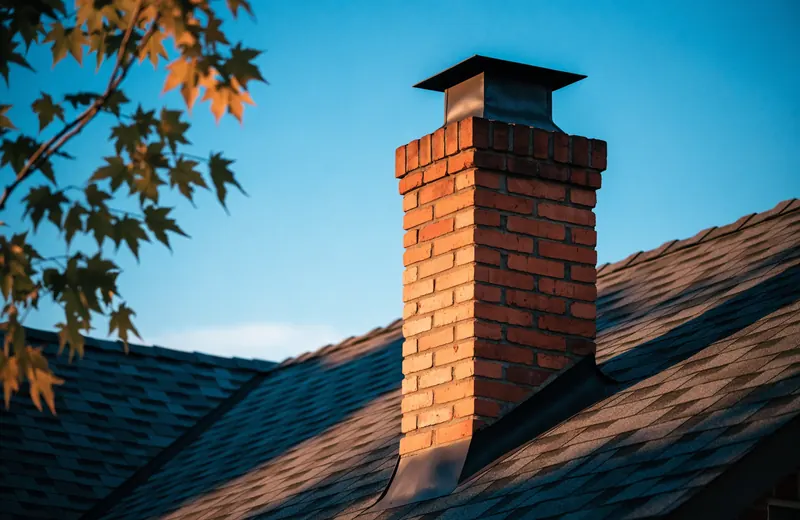
September is the month the house turns over from cooling to heating. FEMA makes it National Preparedness Month, the chimney needs its annual inspection before the first fire, and the furnace needs its tune-up before the first cold night.
National Preparedness Month: the house side of the plan
Ready.gov observes National Preparedness Month every September. The house side: CO alarms with battery backup on every level and outside sleeping areas; a generator plan that keeps it outdoors, at least 20 feet from the house, exhaust away from openings, never plugged into a wall outlet, and shut off and cooled before refueling; a fire extinguisher with a good gauge; and 3 days of food, water and medicine. Write down where the main water shutoff, the gas shutoff and the main breaker are, and show everyone in the house. One rule travels with the gas valve: turn it off only if you smell gas or hear it escaping, and once it is off, leave it off. The gas utility or a qualified professional turns it back on and relights the pilots, never you.
Have the furnace or boiler serviced before the first cold night
ENERGY STAR's fall tune-up covers the gas or oil connections, gas pressure, burner combustion and the heat exchanger. DOE explains why the heat exchanger matters: a leaking one mixes combustion gases with house air, and combustion gases leaking into the house can cause carbon monoxide poisoning. CPSC's standing advice is to have the heating system professionally inspected and serviced annually. Change the filter at the same visit. Read how a gas furnace cycles to follow what the technician is testing.
Have the chimney and fireplace inspected
The national standard, NFPA 211, says chimneys, fireplaces and vents shall be inspected at least once a year for soundness, freedom from deposits and correct clearances, even if you rarely use the fireplace; animals build nests in flues. The Chimney Safety Institute of America recommends sweeping a masonry fireplace at 1/8 inch of soot, sooner if there is any glazed creosote. USFA: have heating equipment and chimneys cleaned and inspected each year by a professional.
Start the heating season with a fresh filter, and choose the rating on purpose
The EPA's advice: choose a filter rated at least MERV 13, or as high a rating as your system's fan and filter slot can handle; most furnaces and HVAC systems can take a MERV 13 without trouble provided the filter is replaced frequently. Denser filters restrict airflow, so if you move up, change it on schedule, and ask the technician at the tune-up whether the system is happy with it. What MERV means.
Acclimate flooring and trim before fall projects
The USDA Forest Products Laboratory's rule: install wood at the moisture content it will average in service, and it will not change size significantly afterward. For interior woodwork, flooring, furniture and trim that is about 8 percent in most of the country (6 to 10 percent for individual pieces), about 6 percent in the dry Southwest and about 11 percent in damp, warm coastal areas. For flooring, FPL says to break open the bundles inside the house so all sides are exposed to the air, and keep the house closed and heated about 15 F above the outdoor temperature for about three days before laying the floor. Read how wood moves.
Every month, all year
- Look at the furnace or air handler filter. Inspect, clean or change it once a month; during cooling season DOE says every month or two. How a filter works.
- Press the test button on every smoke alarm and carbon monoxide alarm. Both get a monthly test.
- Press TEST, then RESET, on each GFCI outlet, and the TEST button on any AFCI breakers in the panel. Monthly for both. If one will not reset or trip, that is an electrician call.
- Run water into any sink, tub or floor drain that does not get used. A trap only blocks sewer gas while it holds water, and once a month is the usual rule.
The Monthly Almanac, by email
One email at the start of each month with that month's checklist for your region, and nothing else. Next month's list, in your inbox before the month starts.
Unsubscribe in any email. We never sell or share the list. Privacy.
References
- National Preparedness Month. Ready.gov (FEMA). https://www.ready.gov/september
- Carbon Monoxide Information Center. U.S. Consumer Product Safety Commission. https://www.cpsc.gov/Safety-Education/Safety-Education-Centers/Carbon-Monoxide-Information-Center
- CPSC Warns of Generator, Carbon Monoxide and Fire Hazards Ahead of Hurricane Season (May 27, 2026). U.S. Consumer Product Safety Commission. https://www.cpsc.gov/Newsroom/News-Releases/2026/CPSC-Warns-of-Generator-Carbon-Monoxide-and-Fire-Hazards-Ahead-of-Hurricane-Season
- Choosing and Using Fire Extinguishers. U.S. Fire Administration (FEMA). https://www.usfa.fema.gov/prevention/home-fires/prepare-for-fire/fire-extinguishers/
- Prepare Before Hurricane Season. NOAA. https://www.noaa.gov/prepare-before-hurricane-season
- Portable Generator Hazards (Safety Alert 5123). U.S. Consumer Product Safety Commission. https://www.cpsc.gov/s3fs-public/5123_SafetyAlert_PortableGenerators_102021_0.pdf
- Utility Safety. North Carolina Emergency Management (ReadyNC). https://www.readync.gov/recover-and-rebuild/utility-safety
- Maintenance Checklist. ENERGY STAR. https://www.energystar.gov/saveathome/heating-cooling/maintenance-checklist
- Furnaces and Boilers. U.S. Department of Energy, Energy Saver. https://www.energy.gov/node/374305
- Carbon Monoxide Questions and Answers. U.S. Consumer Product Safety Commission. https://www.cpsc.gov/Safety-Education/Safety-Education-Centers/Carbon-Monoxide-Information-Center/Carbon-Monoxide-Questions-and-Answers
- Homeowner Resources. Chimney Safety Institute of America. https://www.csia.org/homeowner-resources
- Heating Fire Safety. U.S. Fire Administration (FEMA). https://www.usfa.fema.gov/prevention/home-fires/prevent-fires/heating/
- What is a MERV rating?. U.S. Environmental Protection Agency. https://www.epa.gov/indoor-air-quality-iaq/what-merv-rating
- Guide to Air Cleaners in the Home. U.S. Environmental Protection Agency. https://www.epa.gov/indoor-air-quality-iaq/guide-air-cleaners-home
- Wood Handbook (FPL-GTR-282, 2021), Chapter 13: Drying and Control of Moisture Content and Dimensional Changes. USDA Forest Service, Forest Products Laboratory. https://www.fpl.fs.usda.gov/documnts/fplgtr/fplgtr282/chapter_13_fpl_gtr282.pdf
- Maintaining Your Air Conditioner. U.S. Department of Energy, Energy Saver. https://www.energy.gov/energysaver/maintaining-your-air-conditioner
- Smoke Alarms. U.S. Fire Administration (FEMA). https://www.usfa.fema.gov/prevention/home-fires/prepare-for-fire/smoke-alarms/
- Ground Fault Circuit Interrupters (GFCI). Electrical Safety Foundation International. https://www.esfi.org/ground-fault-circuit-interrupters-gfci/
- How to Test an AFCI. Electrical Safety Foundation International. https://www.esfi.org/how-to-test-an-afci/
- Funky Smell? It Might Be a Dry Drain. Princeton University Office of Environmental Health and Safety. https://ehs.princeton.edu/news/keep-drain-traps-drying-out
Every fact and number on this page comes from one of the sources above, read during the writing of this page. Codes and standards vary by jurisdiction and edition; your local code and your equipment's manual control.