Spring, month 4 of 12
April
Cooling season prep and the first gutter cleaning of the year.
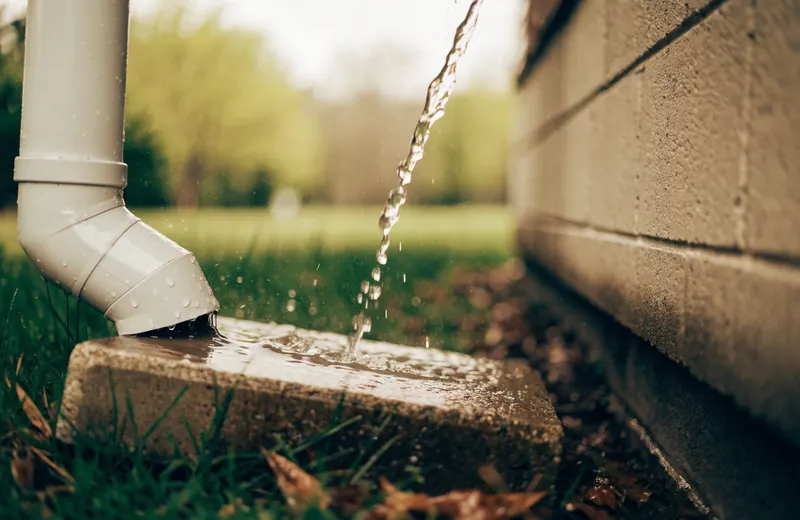
April is the month to get the air conditioner ready while the weather is still mild, clean the gutters that filled over winter, and reconnect the outdoor plumbing you shut down in the fall.
Get the air conditioner or heat pump ready for summer
DOE's homeowner list: clean the area around the outdoor condenser, remove debris, and trim plants back at least 2 feet so air can flow; occasionally pass a stiff wire through the drain channels, because a clogged condensate drain stops the unit from removing humidity; and have the indoor evaporator coil checked every year and cleaned as needed; it sits inside the air handler cabinet, so if you look yourself, cut the power at the furnace switch or breaker first, and leave the cleaning of a dirty coil to the spring tune-up. For heat pumps, DOE adds: clean or change filters every 3 months or as the manufacturer says, clear plants and clutter from the outdoor unit with the fan power turned off, and have a technician service it at least once a year. A well-maintained heat pump can use 10 to 25 percent less energy than a neglected one.
Clean the gutters and check the downspouts
UGA's checklist calls for gutter and downspout cleaning in spring (and again in fall, or more often if needed), with downspouts discharging 2 to 3 feet from the house. The EPA adds to clean and repair roof gutters regularly as part of keeping moisture out of the house. Work from a stable ladder on firm ground, kept away from the power lines that often reach the house at gutter height, with a helper holding the base, and never stand on the top rung; or hire it out. A gutter is not worth a fall.
Turn the outdoor water back on
Reverse what you did in the fall: open the inside shutoff that feeds each outdoor faucet, then open the faucet outside and watch for leaks at the handle, at the wall and, with the faucet off, inside the house below it. A frost-free sillcock keeps its shutoff deep in the wall, inside the heated part of the house; damage from a winter freeze usually shows up now, when water first runs through it, so look for a leak inside the wall or below the faucet.
Walk the house for damp spots before the humid season
The EPA's mold guide sets the targets: keep indoor humidity below 60 percent, ideally between 30 and 50 percent; dry wet materials within 24 to 48 hours of a leak or spill, and in most cases mold will not grow; vent dryers and other moisture sources outside; run the bath fan when showering; and keep the air conditioner's drip pan clean and its drain line flowing. Check under sinks, around the water heater and at the base of the toilet while you are at it.
Every month, all year
- Look at the furnace or air handler filter. Inspect, clean or change it once a month; during cooling season DOE says every month or two. How a filter works.
- Press the test button on every smoke alarm and carbon monoxide alarm. Both get a monthly test.
- Press TEST, then RESET, on each GFCI outlet, and the TEST button on any AFCI breakers in the panel. Monthly for both. If one will not reset or trip, that is an electrician call.
- Run water into any sink, tub or floor drain that does not get used. A trap only blocks sewer gas while it holds water, and once a month is the usual rule.
The Monthly Almanac, by email
One email at the start of each month with that month's checklist for your region, and nothing else. Next month's list, in your inbox before the month starts.
Unsubscribe in any email. We never sell or share the list. Privacy.
References
- Maintaining Your Air Conditioner. U.S. Department of Energy, Energy Saver. https://www.energy.gov/energysaver/maintaining-your-air-conditioner
- Operating and Maintaining Your Heat Pump. U.S. Department of Energy, Energy Saver. https://www.energy.gov/energysaver/operating-and-maintaining-your-heat-pump
- How to Clean an AC Unit. Bryant. https://www.bryant.com/en/us/products/air-conditioners/how-to-clean/
- Home Maintenance Checklist (Circular 1082, reviewed 2021). University of Georgia Cooperative Extension. https://www.fcs.uga.edu/docs/HomeMaintChecklist_update_6.21.pdf
- A Brief Guide to Mold, Moisture and Your Home. U.S. Environmental Protection Agency. https://www.epa.gov/mold/brief-guide-mold-moisture-and-your-home
- Home Safe: Outdoor Repairs checklist. U.S. Consumer Product Safety Commission. https://www.cpsc.gov/s3fs-public/Home_Safe_Outdoor-Repairs_checklist_COVID19_FINAL_0.pdf
- Preventing and Thawing Frozen Pipes. American Red Cross. https://www.redcross.org/get-help/how-to-prepare-for-emergencies/types-of-emergencies/winter-storm/frozen-pipes.html
- What is a Hose Bibb?. PRIER. https://www.prier.com/blog/what-is-a-hose-bibb/
- How a Standard Frost-Proof Faucet Works. Woodford Manufacturing. https://www.woodfordmfg.com/woodford/HowAFaucet/How%20a%20Standard%20Frost-Proof%20Faucet%20Works.pdf
- Maintenance Checklist. ENERGY STAR. https://www.energystar.gov/saveathome/heating-cooling/maintenance-checklist
- Smoke Alarms. U.S. Fire Administration (FEMA). https://www.usfa.fema.gov/prevention/home-fires/prepare-for-fire/smoke-alarms/
- CPSC Warns of Generator, Carbon Monoxide and Fire Hazards Ahead of Hurricane Season (May 27, 2026). U.S. Consumer Product Safety Commission. https://www.cpsc.gov/Newsroom/News-Releases/2026/CPSC-Warns-of-Generator-Carbon-Monoxide-and-Fire-Hazards-Ahead-of-Hurricane-Season
- Ground Fault Circuit Interrupters (GFCI). Electrical Safety Foundation International. https://www.esfi.org/ground-fault-circuit-interrupters-gfci/
- How to Test an AFCI. Electrical Safety Foundation International. https://www.esfi.org/how-to-test-an-afci/
- Funky Smell? It Might Be a Dry Drain. Princeton University Office of Environmental Health and Safety. https://ehs.princeton.edu/news/keep-drain-traps-drying-out
Every fact and number on this page comes from one of the sources above, read during the writing of this page. Codes and standards vary by jurisdiction and edition; your local code and your equipment's manual control.