HVAC
Heating, cooling and the air that moves between them.
A furnace, an air conditioner and a heat pump are simpler than they look: a thermostat asks, a sequence of safety checks answers, and a fan moves the result through the house. Knowing that sequence tells you which problems are a filter and a thermostat setting, and which are a technician's job.
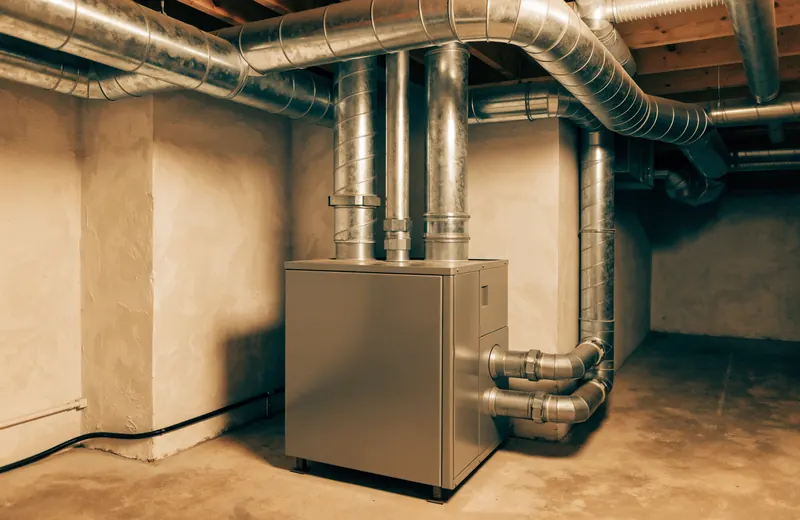
How it works
HVAC
How a gas furnace cycles
Eight steps between the thermostat clicking and warm air at the register
HVAC
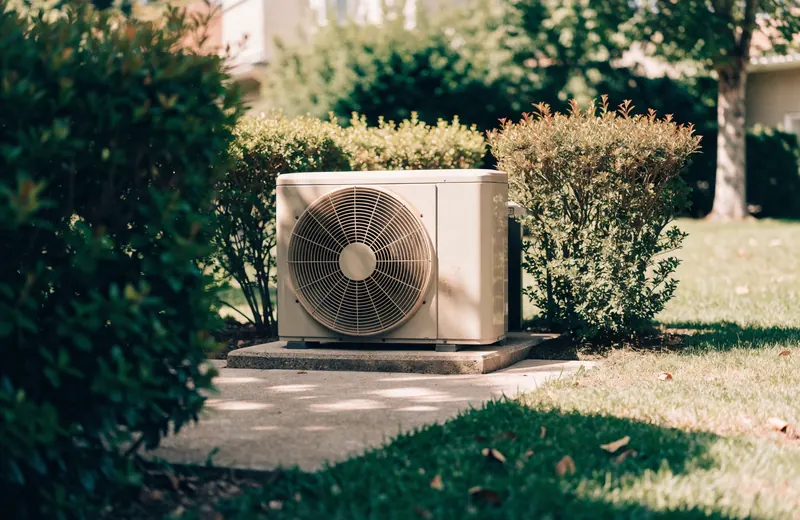
How a central air conditioner and a heat pump move heat
Nothing is made cold. Heat is moved from where you are to where you are not.
HVAC
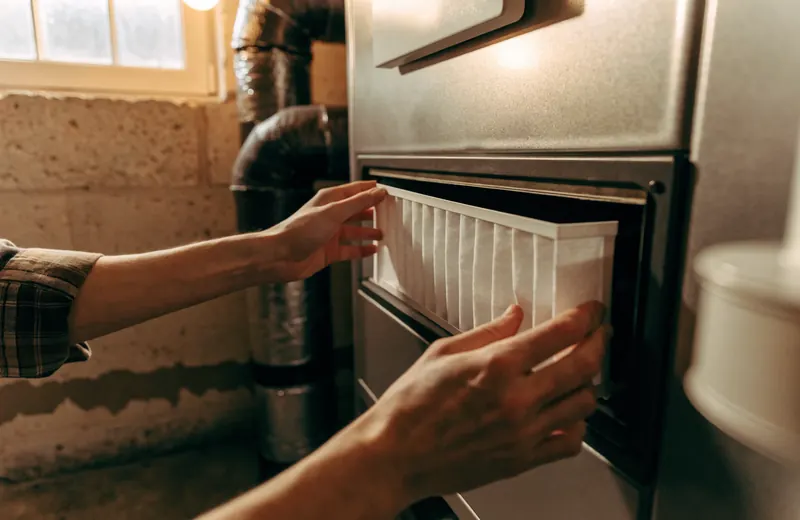
How a furnace and AC filter works
The cheapest part in the system, and the one behind most of its problems
On the almanac
- January: Deep winter. Keep water liquid, air safe and the roof edge clear.
- March: Fix a Leak Week, the clocks change, and the sump pump gets its first test of the year.
- April: Cooling season prep and the first gutter cleaning of the year.
- June: Cooling season in earnest. Filters, drains and the storm supplies.
- July: Peak heat. Give the outdoor unit room to breathe and keep the fans doing their job.
- September: National Preparedness Month. The chimney, the furnace and the alarms get ready for the heating season.
- October: Fire Prevention Week, the winterizing of outdoor water, and gutters after the leaves fall.
Where the line is
Yours, and theirs. Filters, thermostat settings, the furnace power switch and clearing leaves from the outdoor unit: homeowner work. Gas valves, burners, heat exchangers, refrigerant and capacitors: a licensed HVAC technician. Refrigerant work is federally restricted to EPA Section 608 certified technicians.