Spring, month 5 of 12
May
National Electrical Safety Month, deck season and the start of the storm calendar.
National Electrical Safety Month (ESFI); Deck Safety Month (NADRA)
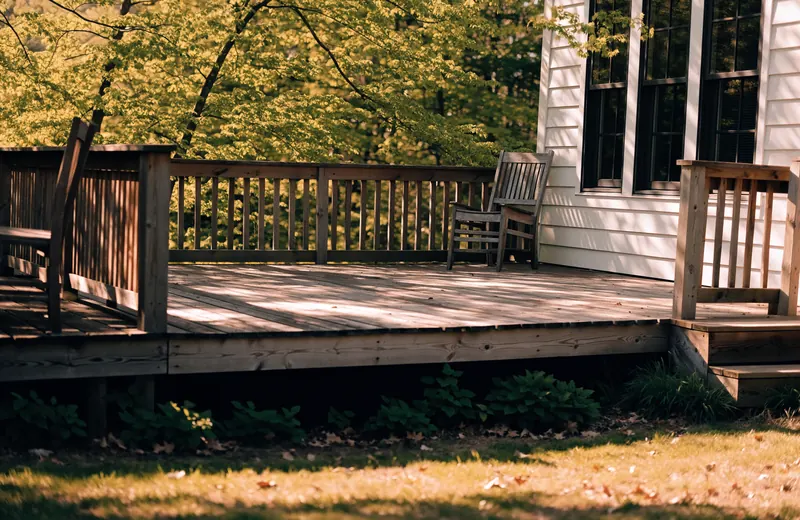
Two trade groups own May: the Electrical Safety Foundation International makes it National Electrical Safety Month, and the deck and railing association makes it Deck Safety Month. Both are good excuses to do the outdoor checks before the season starts, and the hurricane and wildfire calendars begin next month.
Test every GFCI and AFCI, and look at the cords you use outdoors
ESFI says GFCIs should be tested every month and that the National Electrical Code requires them in kitchens, bathrooms, garages, basements, crawl spaces and outdoors. Press TEST, confirm the power cuts, press RESET. For AFCI breakers, ESFI's monthly test is the breaker's own TEST button with the power on; if it does not trip, call a licensed electrician to replace it. Before you plug in the mower, the pump or the string trimmer, check that outdoor outlets are GFCI-protected and that the extension cords are rated for outdoor use. Read how a GFCI trips.
Check the deck before you put the furniture out
NADRA promotes May as Deck Safety Month and recommends a thorough professional inspection for occupant safety. The points an inspector looks at: the ledger board where the deck meets the house, the fasteners, the railings, the stairs and the posts. A deck that wobbles at the railing, has rusted or missing fasteners, or shows rot where the ledger meets the siding is one to keep people off until a contractor has seen it.
Prepare for hurricane season (it starts June 1)
NOAA's Atlantic hurricane season runs June 1 to November 30; the eastern Pacific season starts May 15. NOAA's pre-season list: trim trees, install storm shutters or impact glass, seal outside wall openings, keep plywood or panels on hand, call your insurer for a coverage check-up, document your belongings, and stock at least 3 days of food, water and medicine. If you own a generator, CPSC's rule is outdoors only, at least 20 feet from the house, exhaust pointed away from windows, doors and vents.
Build defensible space around the house
CAL FIRE's zones: Zone 0 is the first 5 feet from any building or deck, kept ember-resistant; Zone 1 runs to 30 feet; Zone 2 from 30 to 100 feet or the property line. Remove dead leaves and pine needles from the yard, roof and gutters. NFPA's home ignition zones use the same distances (immediate 0 to 5 feet, intermediate 5 to 30 feet, extended 30 to 100 feet) and keep roofs and gutters free of debris and leaves so embers cannot ignite them.
Switch ceiling fans to summer direction
DOE: in summer, run the ceiling fan counterclockwise. The moving air lets you raise the air conditioner's thermostat about 4 F with no loss of comfort. Fans cool people, not rooms, so turn them off when you leave.
Fix the door that started sticking
Humid air makes wood take on moisture and swell; dry air makes it shrink, which is why doors that closed fine in February start rubbing in May. Hinges loosening is the other common cause. Tighten the hinge screws one at a time and check the door as you go; replace stripped screws with longer 3-inch wood screws that bite into the framing behind the jamb; if the latch does not catch, tighten the strike plate screws the same way. Trim the door only when that fails, and seal every cut edge. Read how a door hangs and why it sticks.
Every month, all year
- Look at the furnace or air handler filter. Inspect, clean or change it once a month; during cooling season DOE says every month or two. How a filter works.
- Press the test button on every smoke alarm and carbon monoxide alarm. Both get a monthly test.
- Press TEST, then RESET, on each GFCI outlet, and the TEST button on any AFCI breakers in the panel. Monthly for both. If one will not reset or trip, that is an electrician call.
- Run water into any sink, tub or floor drain that does not get used. A trap only blocks sewer gas while it holds water, and once a month is the usual rule.
The Monthly Almanac, by email
One email at the start of each month with that month's checklist for your region, and nothing else. Next month's list, in your inbox before the month starts.
Unsubscribe in any email. We never sell or share the list. Privacy.
References
- National Electrical Safety Month 2026. Electrical Safety Foundation International. https://www.esfi.org/national-electrical-safety-month-2026/
- Ground Fault Circuit Interrupters (GFCI). Electrical Safety Foundation International. https://www.esfi.org/ground-fault-circuit-interrupters-gfci/
- How to Test an AFCI. Electrical Safety Foundation International. https://www.esfi.org/how-to-test-an-afci/
- Outdoor Decoration Safety Tips. Electrical Safety Foundation International. https://www.esfi.org/outdoor-decoration-safety-tips/
- Deck Safety (Check Your Deck). North American Deck and Railing Association. https://www.nadra.org/deck-safety
- Hurricane FAQ. NOAA Atlantic Oceanographic and Meteorological Laboratory. https://www.aoml.noaa.gov/hrd-faq/
- Prepare Before Hurricane Season. NOAA. https://www.noaa.gov/prepare-before-hurricane-season
- CPSC Warns of Generator, Carbon Monoxide and Fire Hazards Ahead of Hurricane Season (May 27, 2026). U.S. Consumer Product Safety Commission. https://www.cpsc.gov/Newsroom/News-Releases/2026/CPSC-Warns-of-Generator-Carbon-Monoxide-and-Fire-Hazards-Ahead-of-Hurricane-Season
- Defensible Space. CAL FIRE (Ready for Wildfire). https://readyforwildfire.org/prepare-for-wildfire/defensible-space/
- Defensible Space for Protection Against Wildfires. DOE Building America Solution Center (PNNL), citing NFPA. https://basc.pnnl.gov/resource-guides/defensible-space-protection-against-wildfires?disaster_resistance=145726
- Fans for Cooling. U.S. Department of Energy, Energy Saver. https://www.energy.gov/energysaver/fans-cooling
- The Shrinking and Swelling of Wood and Its Effect on Furniture (FNR-163). Purdue University Forestry and Natural Resources. https://www.extension.purdue.edu/extmedia/FNR/FNR-163.pdf
- How to Fix an Interior Door. The Home Depot. https://www.homedepot.com/c/ah/how-to-fix-an-interior-door/9ba683603be9fa5395fab9016815bceb
- Installation Instructions for Interior Door Slabs (JII110). JELD-WEN. https://images.thdstatic.com/catalog/pdfImages/c4/c4e413f0-2507-4cf8-aca0-e604fc01a6d9.pdf
- Maintenance Checklist. ENERGY STAR. https://www.energystar.gov/saveathome/heating-cooling/maintenance-checklist
- Maintaining Your Air Conditioner. U.S. Department of Energy, Energy Saver. https://www.energy.gov/energysaver/maintaining-your-air-conditioner
- Smoke Alarms. U.S. Fire Administration (FEMA). https://www.usfa.fema.gov/prevention/home-fires/prepare-for-fire/smoke-alarms/
- Funky Smell? It Might Be a Dry Drain. Princeton University Office of Environmental Health and Safety. https://ehs.princeton.edu/news/keep-drain-traps-drying-out
Every fact and number on this page comes from one of the sources above, read during the writing of this page. Codes and standards vary by jurisdiction and edition; your local code and your equipment's manual control.