How it works: Plumbing
How a P-trap works
The curve under the sink that keeps the sewer out of the house
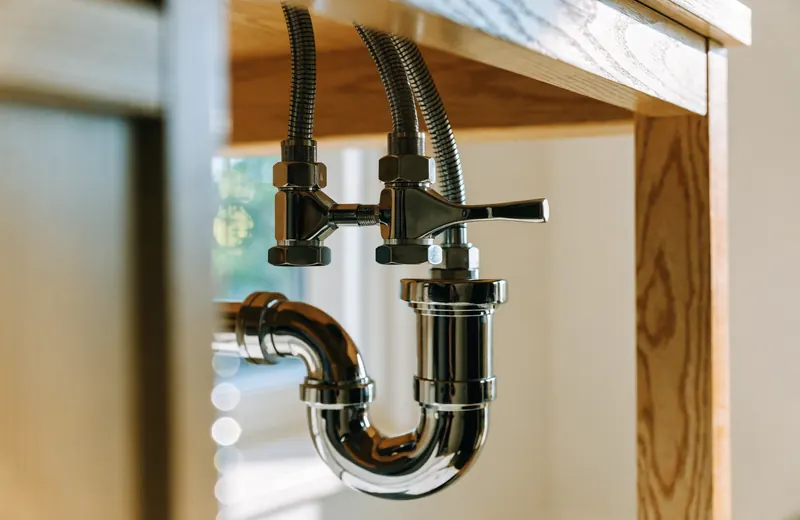
Every drain in the house connects, eventually, to a sewer or a septic tank, and the gases in that system would come straight back up the pipe into the room if nothing stopped them. What stops them is a few inches of standing water. The P-trap is the bent section of pipe under a sink, tub or shower that holds that water in place. In code language a trap is a fitting or device that provides a liquid seal that prevents the emission of sewer gases while letting wastewater pass through.
The trap seal
Look at the shape. Water runs down from the sink into the U-shaped bend, fills it, and spills over the far side (the crown weir) into the horizontal trap arm. When the sink stops draining, the U stays full. The vertical distance between the crown weir and the top of the dip of the trap is the trap seal. Both model plumbing codes, the IPC and the UPC, require that seal to be at least 2 inches and no more than 4 inches deep.
Shallower and the seal is easier to push or pull out; deeper and the trap holds more of what goes down the drain. Two to four inches is the range the codes settled on.
Every fixture gets one
The codes require each plumbing fixture to be separately trapped by a liquid-seal trap. The trap also has to sit close below the fixture: under the IPC the drop from the fixture outlet to the trap weir cannot exceed 24 inches. Traps must be set level with respect to their liquid seals and protected from freezing where necessary. And some trap shapes are banned outright: the IPC prohibits S-traps, bell traps, crown-vented traps, drum traps and traps that depend on moving parts; the UPC bans S-traps, bell traps and crown-vented traps and says no fixture shall be double trapped.
The S-trap is the one you still meet in old houses and in drain kits installed wrong. It looks like a P-trap whose outlet turns straight down instead of running sideways to a vent. The P shape with a vented trap arm is the legal form.
Why the trap needs a vent
A trap holds water only as long as nothing sucks or pushes it out. When a full sink drains, the slug of water rushing down the pipe can pull air behind it and siphon the trap dry. The fix is the vent system: pipes installed to provide a flow of air to or from the drainage system, protecting trap seals from siphonage and back pressure. The code puts it bluntly: no trap shall be installed without a vent, except as otherwise provided.
The trap arm is the stretch of drain between the trap and its vent, and the codes cap its length by pipe size in a table. Past that length, the vent is too far away to do its job and the trap can self-siphon. The vertical pipe that carries the air up through the roof is the vent stack. If you have ever heard a sink gurgle as a tub drains, you have heard a trap seal being pulled at by a vent that is blocked or undersized.
Why traps dry out, and the smell that follows
A trap blocks odors only while it holds water. A drain that goes unused, a guest bath, a basement floor drain, the laundry tub in a house that got a new washer, loses its seal to evaporation, and sewer smell drifts in. Princeton’s environmental health office, which deals with this in lab buildings, gives the homeowner fix: run water in all sinks periodically or pour water down floor drains from time to time, and once a month is the recommendation.
The codes know about evaporation too. Floor drains and similar traps subject to infrequent use must be protected, typically with a trap seal primer, a small device that trickles water into the trap automatically.
So the first thing to do about a sewer smell is not to call anyone. Pour a pitcher of water down every drain you can think of, including the floor drain behind the furnace and the shower in the room nobody uses, and wait a day.
Clearing a P-trap
The under-sink P-trap is the most serviceable fitting in the house. On most sinks the slip nuts are hand-tight or need a gentle turn with pliers. Before you touch it: if anyone has poured a chemical drain opener down that sink, do not open the trap. The liquid standing in it can burn skin and eyes, and mixing a second product with it can react violently. Call a plumber and tell them what was used. Otherwise, put a bucket under it, loosen the two nuts, drop the U, and clean it out. The hair and soap mass that stopped the sink is nearly always in the trap or the first few inches of the trap arm. Reassemble with the washers seated square and run water while you watch for drips.
When to call a plumber
A trap that will not stay full even after you refill it is losing its seal to siphoning or back pressure, which points to a venting problem in the wall or roof: a plumber’s job. A smell that comes back within days of refilling every trap can mean a dry trap you have not found, a cracked vent, or a failed wax ring under a toilet, and the diagnosis is worth paying for. And a drain that backs up at more than one fixture at once is a main-line problem beyond the trap; that one goes to a plumber with a drain machine, through the cleanout, not to a bottle of chemical opener.
Related
- Almanac: every month, run water in unused drains (see the standing list on any month page)
- Glossary: P-trap, trap seal, trap arm, vent stack, drain-waste-vent, wax ring
References
- Plumbing 101 for Beginners (glossary). Danco. https://danco.com/support/plumbing-101
- 248 CMR 10.00 Uniform State Plumbing Code (definitions). Massachusetts Board of State Examiners of Plumbers and Gas Fitters. https://www.mass.gov/doc/248-cmr-10-uniform-state-plumbing-code/download
- Section 1002 Trap Requirements, Plumbing Code 2018 of Kansas (IPC-based). UpCodes. https://up.codes/s/trap-requirements
- Uniform Plumbing Code 2018, Chapter 10 Traps and Interceptors. IAPMO, Nevada edition hosted by the City of Lynnwood, WA. https://www.lynnwoodwa.gov/files/sharedassets/public/v/1/dbs/public-works/submittal-checklist/development-engineering/grease-interceptor/chapter-10-traps-and-interceptors-upc.pdf
- Funky Smell? It Might Be a Dry Drain. Princeton University Office of Environmental Health and Safety. https://ehs.princeton.edu/news/keep-drain-traps-drying-out
- Drain Cleaner. Washington Poison Center. https://www.wapc.org/what-to-do-for/drain-cleaner/
Every fact and number on this page comes from one of the sources above, read during the writing of this page. Codes and standards vary by jurisdiction and edition; your local code and your equipment's manual control.